
Oisin Ninin dori
今回の集中稽古は、ポルトガル、ポルト支部のためのトレーニングであり、支部のインストラクターとしての技術トレーニングでした。ポルトガルの支部とスタディグループはゆっくりですが着実に成長しており、私はポルトを訪れて、支部長としての彼自身の技の向上と指導者としての質の向上を目指して稽古の内容を考慮しました。
特に、審査の後のコメントを受けて、技の向上のために考えたのは一般的に日本語で「気を下げる」と呼ばれるものです。合気のトレーニングでは、従来の筋力(日本語で言う力)に頼るのではなく、合気を使ったテクニックをうまく実行するためには、全身に沿って微妙な体のつながりを発達させる必要があります。
ほとんどの武道家や格闘家は、肩や腕からの緊張した筋力を「力」と同一視するため、上半身に集中しすぎます。実際には、この種の力は対戦相手と衝突し、攻撃者の力を打ち消すことができなくなります-
合気の体が出来てくると、柔らかいけど力強く全身をつなげる力を発達させるため、その結果攻撃者が接触した場合に「くっつける」能力を発達させることができます。これも合気の特徴です。また、相手のバランスを不安定にし相手を軽く投げやすくすることができます。
「気を下げる」ことで、体の全体的なシステムを落ち着かせ、全身の呼吸と循環を改善し、体の筋肉と組織をリラックスさせるため、健康上の利点も享受できます。
この「気を下げる」ことは、私たちの実践の3つの基本原則の一つである「無傳の閉足」の特徴です。スタンスが良く、つま先や足首などが正しくかみ合っている場合、これは他の2つの原則、つまり呼吸(無傳の息)と手の使用(無傳の開)も強化できます。
大東流には、「気を下げる」のに役立つ多くのテクニックがあります。基本的なテクニックは合気下げで、文字通り「沈む合気」と訳されます。無傳塾では、これが基本的な技術の一つで、立ち姿勢の練習をよく行います。
つかまれたら、攻撃者のバランスを崩し、一歩踏み出して意識して下ろします。これは、刀で下向きに切り込む方法と似ています。上半身の力を使って下にスイングすることはありません。
これにより、動きながら足と脚をつなげることができます。このテクニックのバリエーションは、手を交差させ、攻撃者の手を合気でくっつけるものです。攻撃者の手をくっつけることができるのは、足、脚、腰を特定の方法で接続している場合のみです。
また、頭の先から足のつま先までしっかりと体がつながっていることを確認するために、立位瞑想(立禅)も実践しました。
最後に、私たちは順番を待っている間、あまり話すのではなくテクニックを行っている人を見ながら、自分自身の立っている状態を確認する練習に焦点を当てました。そのように訓練したときの道場のエネルギーの違いは明らかで、誰もがより落ち着き集中するようになって、またよりつながりを深め、文字通り「地に足をつける」ことができました。
Molotov aiki(モロトブ合気)
私たちのグループの責任者の一人が指摘したことですが、一般的に若い人や女性に対して技を掛けるのが困難だと言いました。なぜなら、彼らの体は「モロトブ」のような性質を持っているためだからであり、逆に言えば彼ら(若い人や女性)の方が合気のテクニックを習得しやすいと感じると言います。
「モロトブ」とはポルトガルのデザートで軽くてとても美味しいのです。見た目も手触りもしっかりしていているのですが、食べてみると雲のように溶けていきます。この「モロトブ」の柔らかさは、日本語の「餅」に少し似ており、この種の柔らかさは合気を上達させるために重要です。
私たちの支部のインストラクターは自分の気を発達させるために、このような日常の何気ないことにも焦点を当てています。ただ技を練習したり、曖昧に「気」や「合気」といった概念に言及したりしないのが、無傳塾の特徴です。むしろ、これらは身体とマインドのつながりを発展させる実際の方法の現れであり、受け取る技術を通じてその効果を感じることによって認証することができます.
人々に理解されるためには、物理的に感じられ、伝達されなければなりません。合気などをやると主張する人はたくさんいますが、これはオンラインなどで学ぶことは出来ず、これらの原則を物理的に理解していれば、実践者のビデオを見て実際には彼らがうまく接続されておらず、彼らの「気」が上半身に詰まっていることが明らかになります。 このような傾向が武道や格闘技では蔓延していると思います。
無傳塾ではハイレベルな合気が出来るだけではなく、私たちのメソッドを通じて、誰でもこれらを学び上達させることが出来ます。
大東流無傳塾ヨーロッパ総轄支部長
アイルランド支部長オシンバーク
Sergio Aiki Sage
Maria Aiki Sage
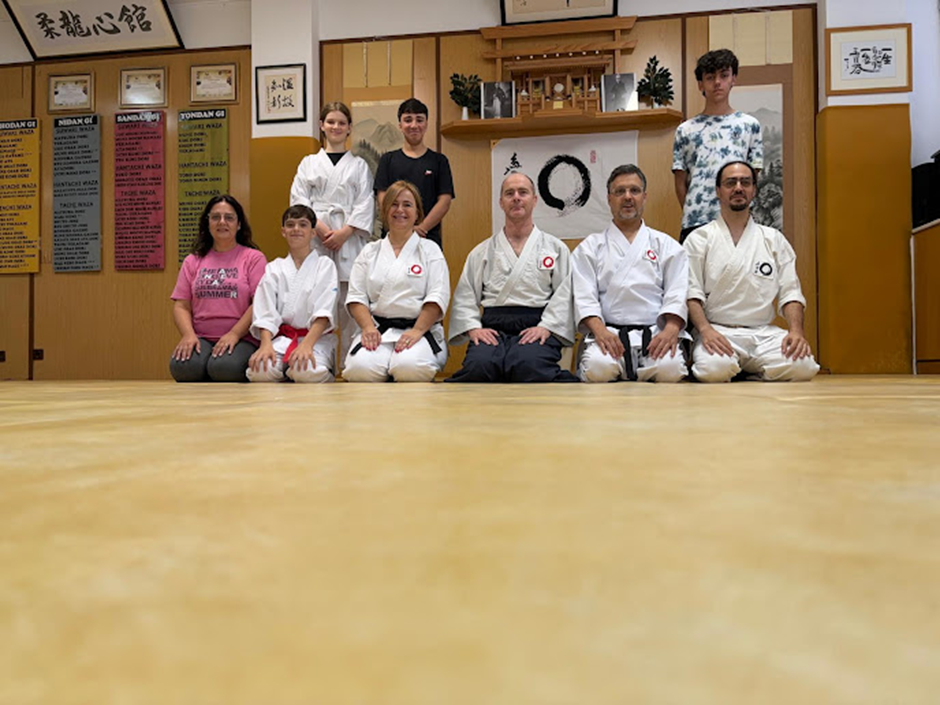
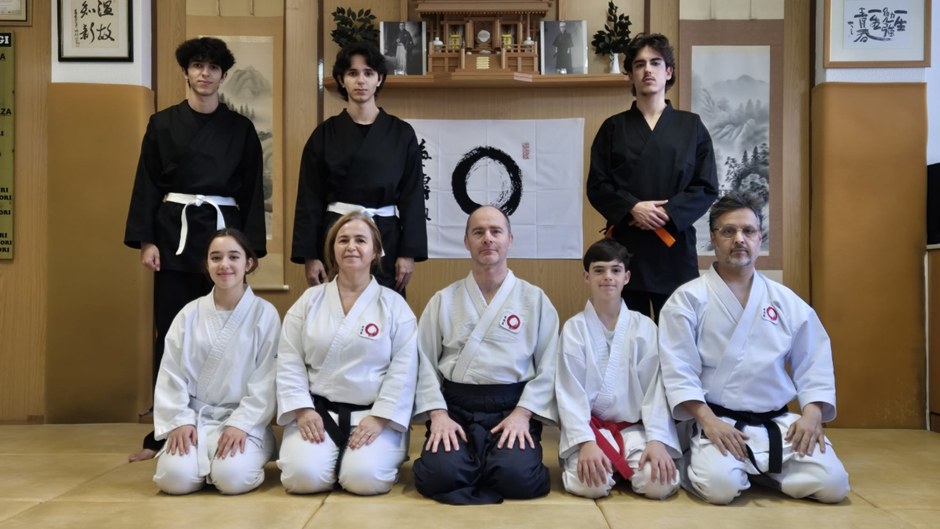
Group Portrait Porto Branch December 2024
Muden Aiki in Europe part one: Portugal Training 2024
This was more an intensive training for our branch in Porto and technical training for branch instructors. The branch and study groups in Portugal are slowly growing and I wanted to visit Porto to concentrate on their own practice of the instructors and branch heads.
In particular, after a review, one of the features identified for development is what is generally referred to in Japanese as ‘lowering one’s ki’. In aiki training, in order for the body successfully execute techniques with aiki instead of relying on conventional muscular power (known in Japanese as chikara), one must develop subtle connections along the entire body.
Almost always, martial artists concentrate too much on their upper body as they equate this tense strength from their shoulders and arms as “power”. In reality, this kind of power causes you to clash with an opponent and leaves you unable to negate an attacker’s power- which is a hallmark of aiki. It also stops you developing a body that is soft yet powerfully connected, which in turn allows you to develop the ability to have an attacker ‘stick’ to you if they make contact. This another hallmark of aiki. Upper body tension also prevents you from destabilising the opponent’s balance which can make them light and easy to throw.
By lowering your ki, you can also enjoy health benefits as it calms your overall system, improves breathing and circulation throughout your body and relaxes the muscles and tissues of the body.
This lowering of the ki is a feature of one of the three basic principles of our practice, known as muden no hei soku, or stance. If your stance is good and your toes and ankles etc are engaged correctly, this can also strengthen the other two princples: breathing (muden no soku) and use of the hands (muden no kai).
There are a number of techniques in daito ryu that help in lowering the ki. The basic technique is aiki sage- which literally translates as ‘sinking aiki’. In muden juku this is one of our fundamental techniques and we often practice form a standing position. When you are grabbed you unbalance the attacker, then take a step and drop your intention downwards as you do so. This is similar in the way you cut downward with a sword. You do not use upper body power to swing downward.
This helps connect your feet and legs in movement. A variation of this technique is one where you cross your hands and the attacker’s hands stick together with aiki. You can only stick the attacker’s hands together if you have connected your feet legs and hips in a certain manner.
We also practice standing meditation (ritsuzen) to check that our bodies were connected from head to toe.
Finally, the way we practice also helps lower the ki. We focused on line practice where people do not talk so much rather they watch the person doing the technique and check their own standing connection while they wait their turn. The difference in energy in the dojo when we trained that way was palpable. Everybody grew more calm and focussed which allowed them to become more connected and “grounded”.
Molotov aiki
One interesting aspect of this was noted by one of our group heads, for younger people and women, it was more challenging to do techniques on them. Conversely, they found it easier to do aiki techniques as their bodies had the quality of ‘molotov’. A Molotov is a light Portuguese dessert. It’s delicious and it looks and feels solid when you take a spoonful, but when you try to eat it, it dissolves like a cloud. This ‘molotov’ softness is a little like the ‘mochi’ cake in Japanese and this sort of softness is important to develop for aiki.
Our branch instructors focus on these methods for developing and lowering one’s ki. It is a hallmark of muden juku that we do not just practice techniques or mention concepts like ki or aiki as vague concepts. Rather, these are manifestations of real ways of developing the body and mind connections and can be authenticated by feeling their effectiveness through receiving techniques. They must be physically felt and transmitted in order to be understood. There are many people claiming to do things like aiki etc, but this cannot be learned online and if you have physically understood these principles, it becomes clear when you see videos of practitioners that they are actually not well connected and their ‘ki’ is stuck in their upper bodies. This is rampant in martial arts I think.
Not only can we do high level aiki. We also have a method through which anyone can learn and develop these thigs through our system.
大東流無傳塾ヨーロッパ総轄支部長
アイルランド支部長オシンバーク
いい氣 いい出会い いい仲間づくり
Good energy Good enccounters Good relationships
合氣護身術大東流無傳塾
塾長・最高師範 飯田 宏雄